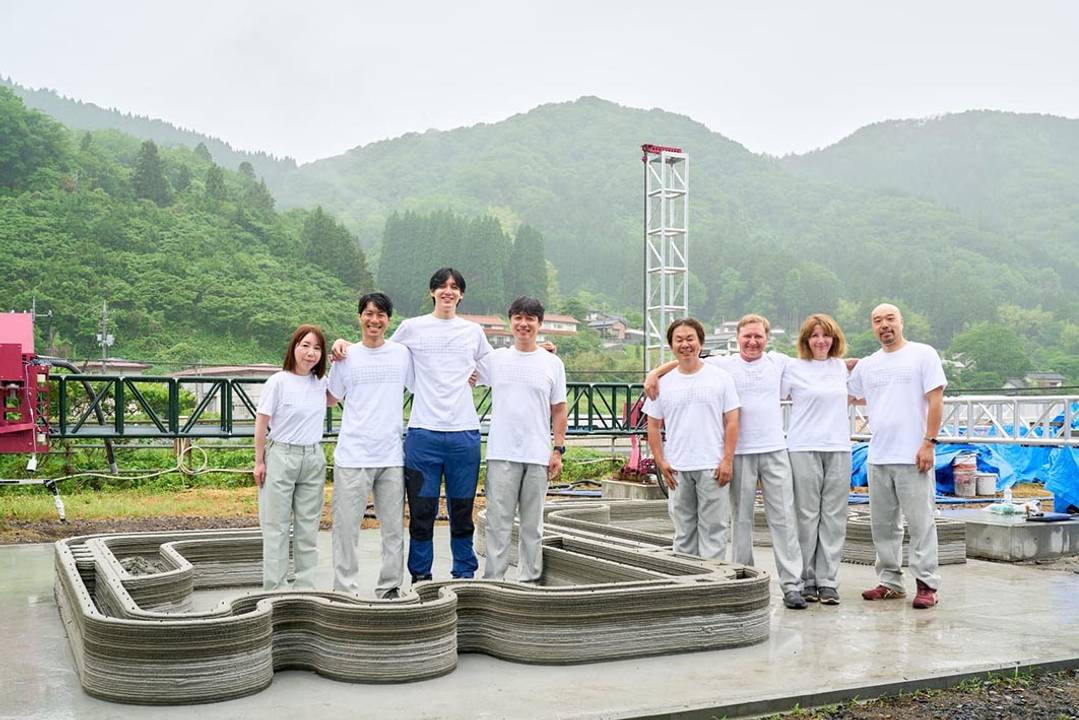
Japan-based technology company V3D Asia Ltd and its commercial arm, Nuvah Sdn Bhd, have joined forces with SIRIM Academy Sdn Bhd to develop Malaysia’s first industry standards for 3D construction printing. This initiative represents a major step towards accelerating the safe, structured and scalable adoption of automated construction technologies across the country.
Operating under the philosophy of ‘Designed in Japan, Built in Malaysia’, V3D Asia is actively driving the localisation of 3D construction printing technology through its Southeast Asian headquarters in Kuala Lumpur. Together with Nuvah, the group aims to build a robust, home-grown construction ecosystem that reduces reliance on imported systems while positioning Malaysia as a future-ready hub for construction innovation.
“This collaboration marks an important milestone not only for V3D Group, but for the future of Malaysia’s construction industry as a whole. Establishing clear industry standards is essential in accelerating the adoption of 3D printed construction technologies safely, responsibly, and at scale. When clear and credible standards exist, the entire construction ecosystem benefits – developers can build with greater confidence, regulators have a clear basis for approval, and buyers can trust what they are purchasing,” said Kazuhiro Ono, chairman of V3D Group.
The collaboration will bring together key stakeholders from Malaysia’s construction and regulatory ecosystem. As the primary industry partners on the drafting committee, V3D Asia and Nuvah will contribute their materials science expertise, engineering knowledge and real-world implementation insights to help shape the standards framework.
“The development of industry standards is a critical step in supporting the safe and structured adoption of emerging construction technologies in Malaysia. Through this collaboration with V3D Asia and Nuvah, SIRIM Academy brings its expertise in industry standard development, training and certification to support the establishment of a credible and practical framework for 3D construction printing. We believe this initiative will strengthen industry confidence, encourage innovation and provide a clear pathway for conformity assessment and certification within the construction sector,” said Dr Mohd Bakri bin Jali, covering CEO at SIRIM Academy.
The initiative comes at a pivotal moment as Malaysia’s construction industry continues to face persistent challenges, including labour dependency, material wastage, rising costs and lengthy project timelines. A recognised framework for 3D concrete printing is expected to facilitate the safe implementation of the technology, improve construction efficiency, reduce waste and advance the country’s push towards more sustainable and resilient urban development.
Integrated, end-to-end ecosystem
Unlike conventional construction technology providers, V3D Asia and Nuvah operate as an integrated, end-to-end ecosystem. V3D Asia serves as the construction technology arm specialising in 3D printing construction engineering and local manufacturing capabilities, while Nuvah functions as the real estate and commercial development arm focused on delivering next-generation residential and commercial projects. Together, both entities form a localised supply chain that supports the long-term growth of 3D printed construction in Malaysia.
Beyond driving industry standards, Nuvah is also preparing to introduce Malaysia’s first 3D printed luxury bungalow development, slated for launch in the fourth quarter of this year. Located within the Country Heights Damansara enclave, the ultra-luxury hillside project is currently accepting Expressions of Interest (EOI).
The development will introduce a ‘quiet luxury’ architectural concept that embraces organic, cascading forms inspired by nature. Leveraging the design flexibility of 3D printing construction technology, the project replaces traditional sharp-edged structures with fluid, curved monoliths that blend seamlessly with the surrounding topography.
Looking ahead, the collaboration is expected to play a key role in expanding the use of 3D concrete printing in Malaysia, bolstering industry confidence in next-generation construction methods and accelerating the country’s transition towards more advanced and sustainable building practices.